On 22.12.2025, a talk dedicated to propagation of packets in computer networks and its analogy with vehicular traffic and gas dynamics flows was given at Tsinghua university and in collaboration with Nipa cloud.
The talk began with a practical motivation stemming from a flow management problem in an open-source software-defined network platform (OpenSDN). While initially an engineering task, its solution prompted a broader review that transcends the original objectives.
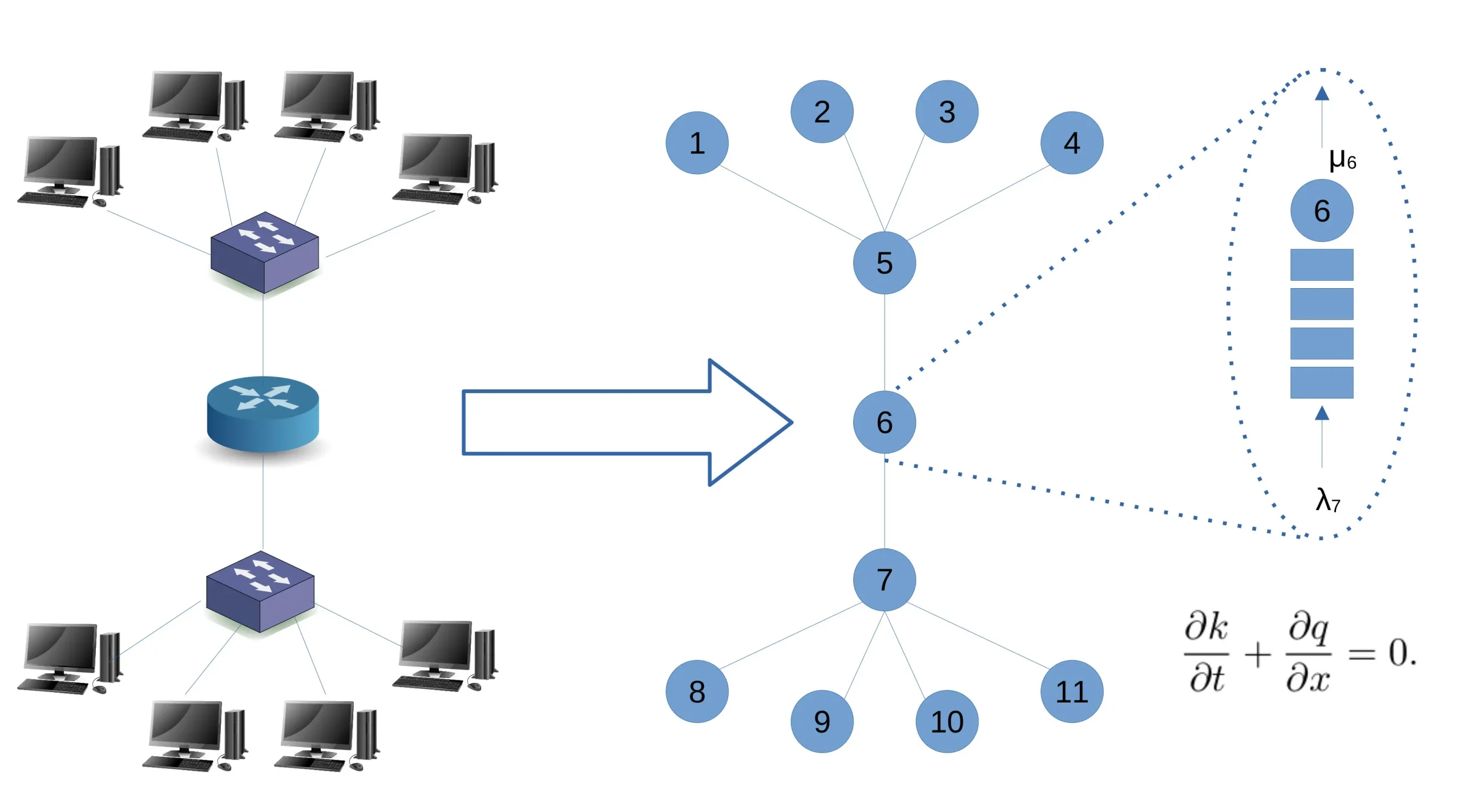
In searching for formal definitions of “flow” in computer networks, we discovered likely roots in traffic theory and numerous parallels with gas dynamics and vehicular flows. Moreover, research indicates that many terms and associated phenomena common to the latter domains—such as phase transitions, self-similarity, and others—are also valid for data flows in computer networks. Additionally, several noteworthy works apply continuous models of transport processes to address interesting problems in computer network design and architecture. These works, along with current and future challenges in software-defined network engineering, demonstrate how continuous models can help solve important practical issues encountered during network operation.
Despite clear similarities, gas dynamics, vehicular traffic, and computer networks exhibit fundamental differences that impose restrictions on model applicability and prevent complete analogy between processes occurring in these three domains. The talk concluded by synthesizing these differences, challenges, and similarities to provide the audience with a high-level perspective on these topics.