Quick recap
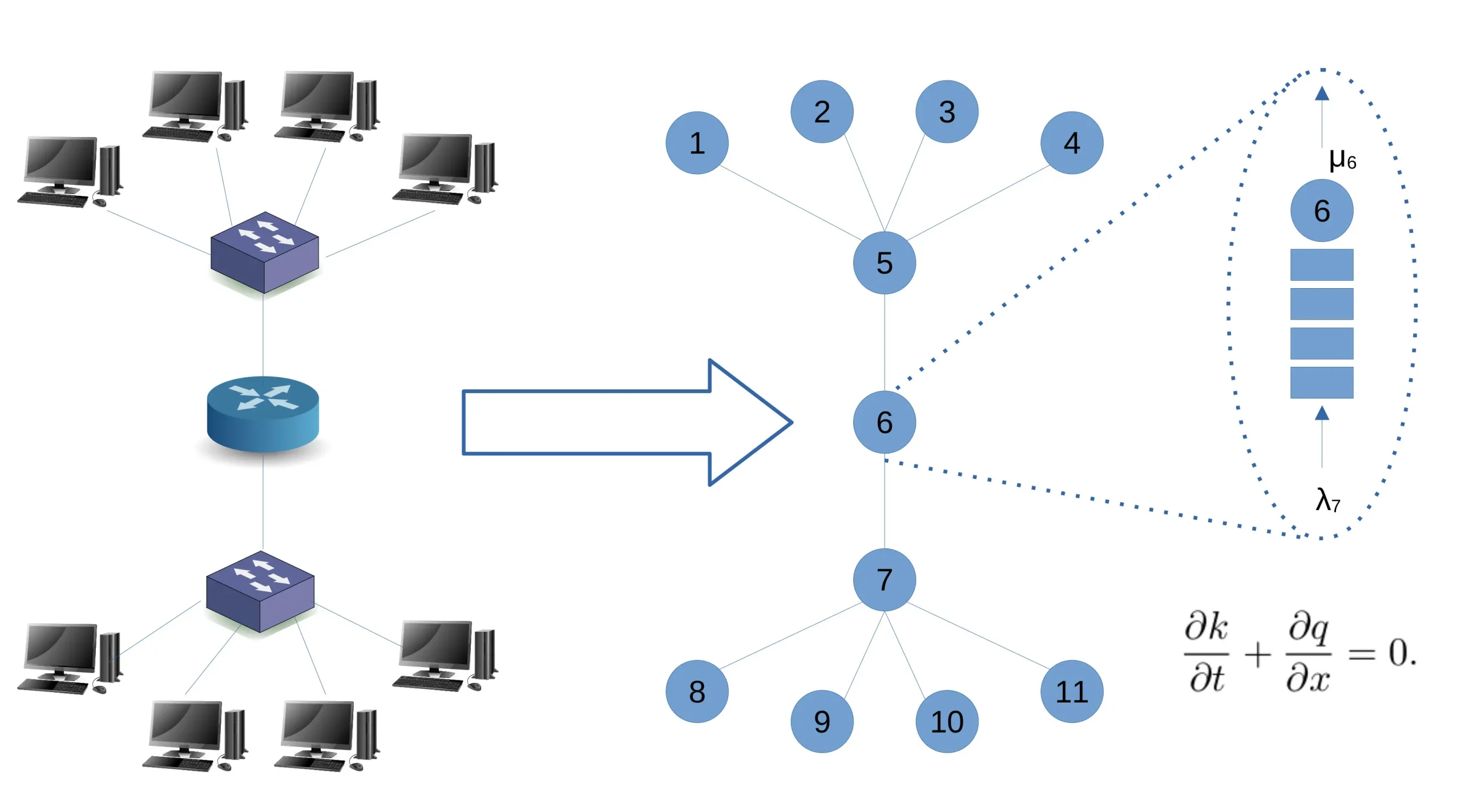
Dr. Matvey Krapin delivered a lecture on the similarities and differences between vehicular traffic flow, computer network flow, and gas dynamics, highlighting the analogies between shock waves in these systems. He discussed the development of models for vehicular traffic, including microscopic and macroscopic approaches, and their application to computer networks. The lecture covered the use of fluid approximation and kinetic approaches in modeling network flows, as well as the challenges in applying gas dynamics principles to traffic flow. Participants asked questions about the existence of shock waves in computer networks and the transition between free flow and congested states. Dr. Krapin emphasized the importance of interdisciplinary knowledge in addressing these complex systems and expressed hope for future collaborations with the attendees.
Next steps:
Next steps were not generated due to insufficient transcript.
Summary:
Vehicle and Network Flow Analogies
Dr. Matvey Krapin delivered a presentation on the similarities and differences between vehicle and computer network flows, highlighting analogies in physics and real-life applications. He discussed the use of OpenSDN, a software-defined network technology, and its application in various industries, including financial companies and data centers. The presentation also covered the development of vehicular traffic models, conservation principles, and the challenges of modeling computer network flows. Dr. Krapin emphasized the importance of interdisciplinary collaboration between universities and OpenSDN communities to advance knowledge in this field.
Network Modeling Evolution Insights
Matvey discussed the evolution of network modeling, highlighting the shift from fluid models to kinetic approaches in the early 2000s, influenced by collaborations between Greek and Russian scientists. He noted the similarity between vehicular and computer network traffic, which was first identified by Professor Istvan Chavai in 1995, suggesting that similar modeling approaches could be applied to both. Matvey also mentioned the potential use of methods like the Prigogine equation and gas dynamics models for simulating network behavior over longer time ranges.
Shock Waves in Traffic and Networks
Matvey presented a report on shock waves in traffic and computer networks, discussing the analogy between gas dynamics and vehicular flows. Lubing Xu asked about the applicability of shock wave concepts to computer networks, and Matvey explained that while computer networks are simpler in some ways, they have unique challenges like packet loss and protocol management. Yanfei inquired about modeling traffic flow around roundabouts from a gas dynamics perspective, and Matvey acknowledged the challenges but noted that both fields of study are underdeveloped. The conversation ended with expressions of hope for future collaboration, including a potential visit to China.